<p><br />
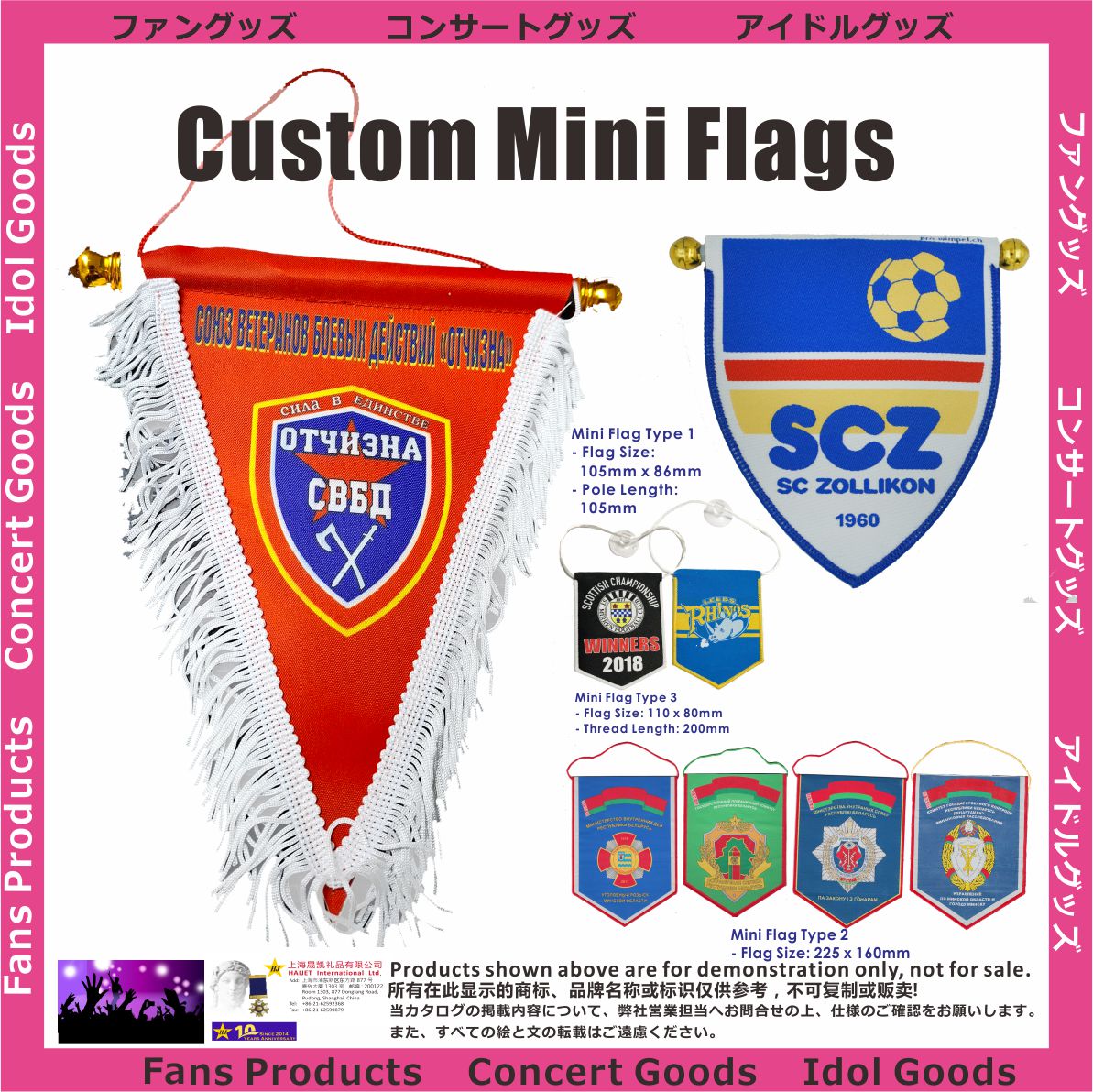
Custom mini flags can be produced in a variety of shapes, including shield-shaped, rectangular, and triangular styles. Below are the key features and specifications of this product:</p>
<p>(1) Product Features</p>
<p>1. Available in Woven/Jacquard or Printed Construction:<br />
Simple flag designs can be produced using woven or jacquard techniques with colored yarns, creating a premium textured appearance. Printed versions are more suitable for complex full-color artwork, small text, fine lines, and gradient designs, which are easier to reproduce accurately through printing.</p>
<p>2. Common Sizes:<br />
The following are the most popular standard sizes:</p>
<p>Type 1: Flag size approximately 185 × 86 mm, pole length approximately 105 mm.<br />
Type 2: Approximately 225 × 160 mm, with a hanging cord along the top edge.<br />
Type 3: Approximately 110 × 80 mm, with a hanging string approximately 200 mm long.<br />
Type 4: Triangular flag approximately 200 × 150 mm, pole length approximately 200 mm.</p>
<p>3. Custom Shapes Available:<br />
Shield-shaped, rectangular, triangular, swallowtail, and many other custom shapes can be produced according to customer artwork.</p>
<p>4. Flexible Accessories:<br />
Available with wooden poles, gold-colored finials, hanging cords, strings, merrow borders, or heat-cut edges. The flags can be made as handheld mini flags, desktop flags, hanging pennants, or promotional giveaway flags.</p>
<p>5. Compact Mini Size:<br />
Designed for portability and display on desks, inside vehicles, retail showcases, or for large-scale event giveaways. They are intended as miniature decorative flags rather than full-size ceremonial or welcome flags.</p>
<p>(2) Important Considerations</p>
<p>1. Single-Sided or Double-Sided Construction:<br />
Woven pennants are typically produced as single-sided, with the reverse side appearing mirrored or lighter in color. If identical graphics are required on both sides, double-sided weaving or double-sided printing should be specified in advance.</p>
<p>2. Printing Fabrics:<br />
Common materials include polyester twill, pongee fabric, and satin. Lightweight fabrics provide an elegant drape for indoor decoration, while thicker materials with UV-resistant and waterproof treatments are recommended for outdoor or long-term display.</p>
<p>3. Printing Methods:<br />
Dye-sublimation printing is ideal for polyester fabrics and offers excellent color fastness. Heat transfer printing is suitable for small-volume full-color orders, while screen printing is more economical for large quantities with fewer colors and provides a thicker ink texture.</p>
<p>4. Edge Finishing:<br />
Cut edges are economical but may become fuzzy after extended use. Shield-shaped and triangular pennants are generally recommended with merrow borders or laser heat-sealed edges. Customers should also confirm whether a backing layer is required to improve stiffness.</p>
<p>5. Accessory Specifications:<br />
Pole length, finial material, hanging cord or string length, custom woven or printed labels, individual OPP bags, and header card packaging can all be customized according to project requirements.</p>
<p>6. Durability and Care:<br />
Avoid prolonged exposure to direct sunlight and machine washing. For outdoor applications, UV resistance, color fastness, and waterproof treatment should be confirmed before production.</p>
<p>(3) Advantages</p>
<p>1. Woven versions offer a premium texture similar to embroidered badges or traditional pennants, providing better scratch resistance and longer-lasting colors than printed products.</p>
<p>2. Printed versions are suitable for virtually any artwork, offering greater design flexibility while generally providing lower production costs and shorter lead times than woven pennants, especially for small quantities, multiple designs, or urgent orders.</p>
<p>3. Both production methods are highly customizable, allowing flexibility in size, shape, poles, cords, edge finishing, and packaging.</p>
<p>4. Strong brand recognition makes them particularly suitable for sports clubs, schools, organizations, and corporate logos or emblems.</p>
<p>5. Ideal for promotional giveaways, commemorative events, souvenir collections, and limited-edition merchandise with multiple designs in small quantities.</p>
<p>(4) Disadvantages</p>
<p>1. Woven production is generally more expensive than printing. Multiple colors, double-sided construction, and merrow borders will further increase production costs.</p>
<p>2. Printed pennants are usually less resistant to scratching and weather exposure than woven or embroidered versions. Single-layer printed fabric may wrinkle easily, so double-layer construction or backing is recommended when additional durability is required.</p>
<p>3. Pointed corners and tassels are the areas most susceptible to wear. Frequent rubbing may cause fraying or loose threads over time.</p>
<p>4. Edge finishing quality varies among manufacturers. Lower-cost products are more likely to suffer from loose stitching, uneven edges, or misaligned construction. The quality of wooden poles and accessories should also be carefully evaluated.</p>
<p>5. Due to their compact size, mini pennants have limited space for artwork and are not suitable for long slogans, detailed QR codes, or information-heavy designs.</p>
<p>(5) Applications</p>
<p>1. Handheld supporter flags, club crest pennants, and championship commemorative flags for football, basketball, baseball, and other sports teams.</p>
<p>2. Schools, alumni associations, scout groups, clubs, corporate anniversaries, product launches, exhibitions, and trade show booth promotions.</p>
<p>3. National Day celebrations, parades, cheerleading events, concerts, marathons, fun runs, and market stall decorations.</p>
<p>4. Themed displays in bars and restaurants, tourist souvenirs, VIP gifts, lucky draw prizes, and promotional merchandise.</p>
<p>Feel free to drop us an inquiry at sale05@haijet.com</p>