<p>Common English terms for toothbrush embroidery include:</p>
<p>1. Toothbrush Embroidery – A direct translation of the Chinese term. The name originated from the early finishing process, where the raised loops were brushed with a toothbrush to create an even pile. This term is commonly used by manufacturers in Mainland China and Taiwan.</p>
<p>2. Towel Embroidery – Named after its towel-like appearance and texture. This term is also recognized in Europe and North America.</p>
<p>When communicating with manufacturers, chenille embroidery patch is generally the easiest term for overseas suppliers to understand when referring to toothbrush embroidery patches or badges. If you are working with Japanese, Korean, or Taiwanese suppliers, towel embroidery is also widely accepted.</p>
<p>The following are the key features and specifications of this product:</p>
<p>(1) Product Features</p>
<p>1. Strong Three-Dimensional Texture:<br />
Special toothbrush embroidery stitching creates raised loops or cut-pile embroidery, resulting in a soft, fluffy surface with a highly dimensional appearance that is noticeably different from conventional flat embroidery.</p>
<p>2. Rich and Solid Color Coverage:<br />
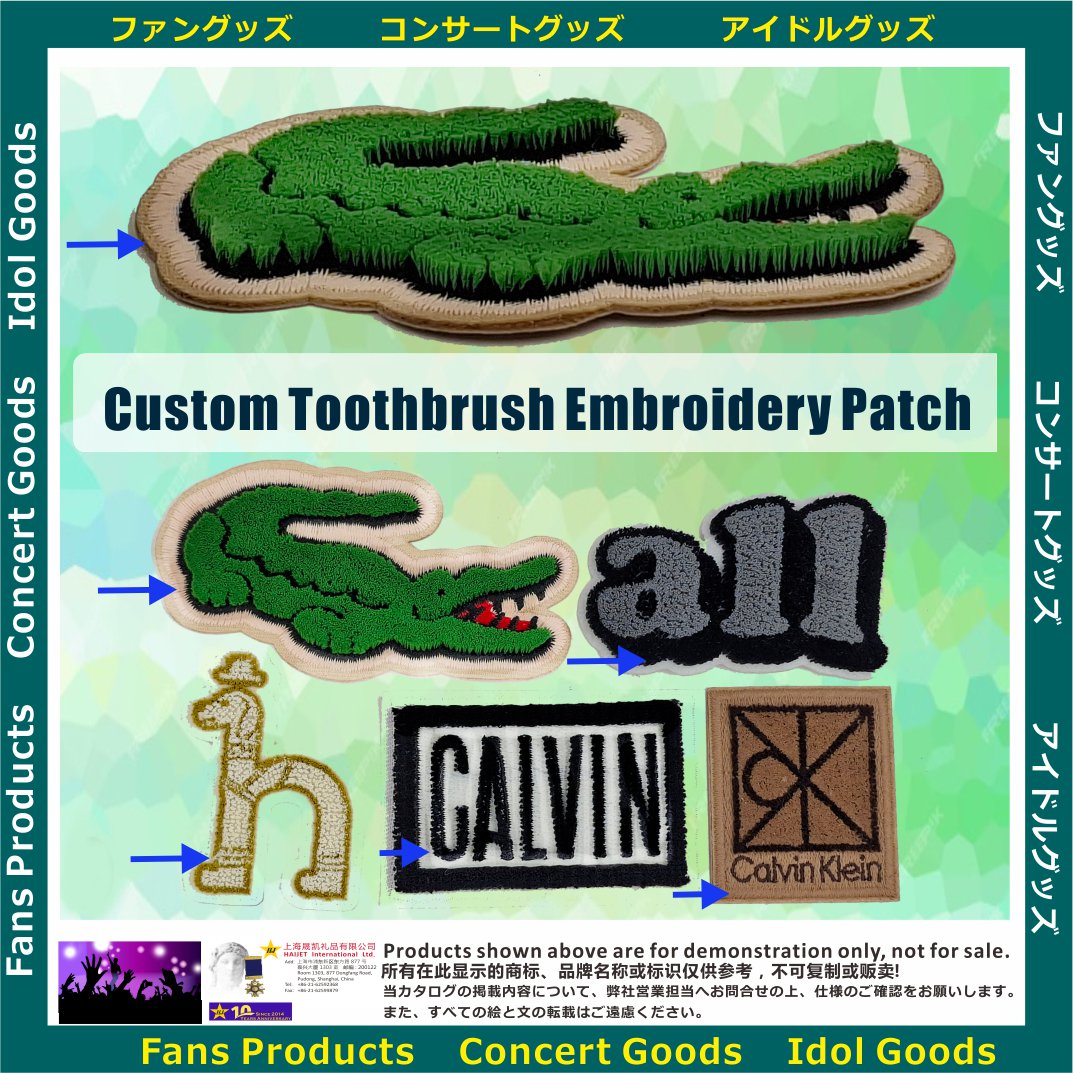
The raised pile completely covers the base fabric, producing vibrant, saturated colors. As shown in the sample, the green crocodile body and gold lettering appear fuller and more substantial than standard flat embroidery. This makes the embroidery particularly suitable for bold branding and eye-catching promotional products that need to stand out from a distance.</p>
<p>3. Suitable for Custom Shapes:<br />
Animal designs, letters, logos, and other custom shapes can all be produced, making this technique a popular choice for embroidered patches, badges, and woven labels.</p>
<p>4. Highly Flexible Combination Process:<br />
Toothbrush embroidery can be combined with flat embroidery, sequins, satin stitches, and other embroidery techniques. Fine details such as eyes, teeth, or outlines are often reinforced with flat embroidery for better definition.</p>
<p>5. Frequently Finished with a Merrow Border:<br />
The edges are commonly wrapped with a Merrow border, as shown in the sample, using matching satin stitching. This prevents the raised pile from unraveling, creates a clean finished edge, and allows the patch to be sewn or heat-applied directly onto garments.</p>
<p>(2) Product Details</p>
<p>1. Adjustable Pile Height:<br />
The pile height can be customized from 1 mm to 5 mm, with 2 mm and 3 mm being the most commonly used. Higher pile creates a fuller appearance but is more prone to flattening over time.</p>
<p>2. Base Fabric:<br />
The foundation fabric is typically felt or twill, both of which provide sufficient thickness and stability to support the raised embroidery.</p>
<p>3. Fine Detail Limitations:<br />
Letters and intricate graphics require a minimum stroke width. Extremely thin lines or delicate scripts cannot achieve the raised pile effect and should instead be produced using flat embroidery.</p>
<p>4. Various Backing Options:<br />
Available backing options include heat-seal adhesive, hook-and-loop (Velcro), pin backing, or a plain sew-on backing, depending on the intended application. Different backing options can be selected according to the intended application and customer requirements.</p>
<p>(3) Advantages</p>
<p>1. Soft, comfortable texture with a premium towel-like appearance.</p>
<p>2. Highly three-dimensional, making logos and mascots more eye-catching and recognizable.</p>
<p>3. Durable and washable for everyday use.</p>
<p>4. Ideal for custom production with low minimum order quantities and flexible sampling.</p>
<p>5. Suitable for a wide range of custom designs, making it popular for promotional gifts, fashion accessories, and branded merchandise.</p>
<p>(4) Disadvantages</p>
<p>1. Not suitable for extremely fine lines, small lettering, or complex gradient artwork, as tiny details may lose definition.</p>
<p>2. After prolonged rubbing or repeated washing, the pile may lean in different directions, causing slight variations in color appearance.</p>
<p>3. The manufacturing process is more complex than standard flat embroidery, involving pile embroidery, pile cutting, and edge finishing, resulting in higher costs and longer production lead times.</p>
<p>4. Very small patches (generally below 10 mm in height) are difficult to finish with a Merrow border and are more likely to fray.</p>
<p>(5) Applications</p>
<p>1. Apparel Accessories:<br />
Widely used for varsity jackets, hoodies, sweatshirts, children's clothing, chest badges, arm patches, and logo patches.</p>
<p>2. Brand Identification:<br />
The crocodile design shown in the sample is a classic example of a brand-style logo. Letter patches are also commonly used for school uniforms, club apparel, sports teams, names, initials, and player numbers.</p>
<p>3. Licensed Merchandise and Promotional Products:<br />
Raised embroidered patches featuring IP characters, mascots, or cartoon designs are popular because of their soft texture and premium appearance.</p>
<p>4. Home Décor:<br />
Frequently applied as decorative patches on cushions, blankets, and other home textile products to add texture and dimension.</p>
<p>In general, if a customer's artwork contains small lettering, intricate details, or sharp edges, it is recommended to produce the main design using toothbrush embroidery while using flat embroidery for the fine details. This combination provides the best visual effect and preserves design clarity. To extend the lifespan of the raised pile, the finished product should be turned inside out and placed in a laundry bag before washing. Proper storage away from excessive moisture and friction will also help maintain the pile's original texture and appearance.<br />
Feel free to drop us an inquiry at sale05@haijet.com</p>