<p>1. Product Features of Water Soluble Embroidery / Water Soluble Lace</p>
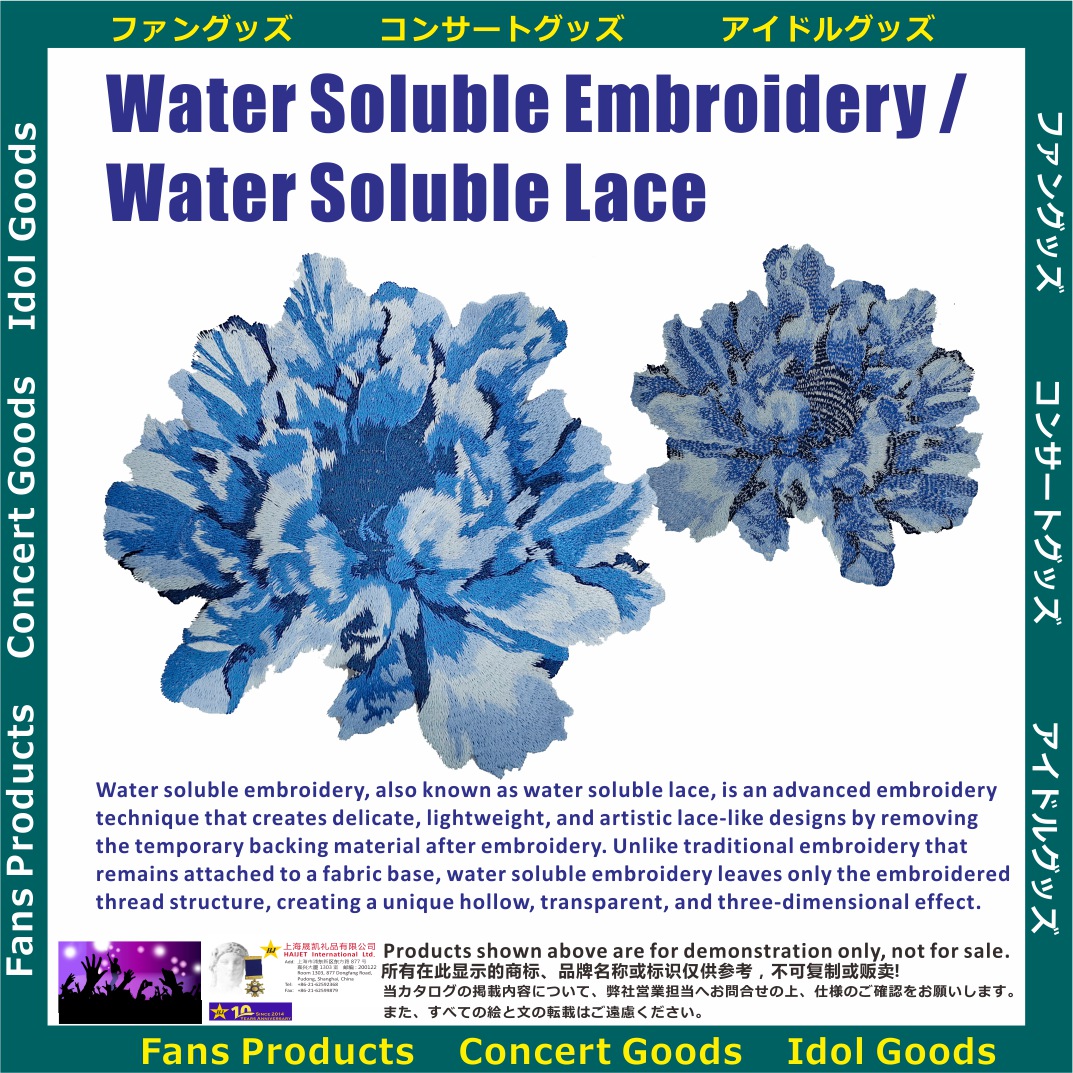
<p>Water soluble embroidery, also known as water soluble lace, is an advanced embroidery technique that creates delicate, lightweight, and artistic lace-like designs by removing the temporary backing material after embroidery. Unlike traditional embroidery that remains attached to a fabric base, water soluble embroidery leaves only the embroidered thread structure, creating a unique hollow, transparent, and three-dimensional effect.</p>
<p>Backing Material:</p>
<p>Water soluble embroidery uses water-soluble non-woven fabric, mainly made from PVA (Polyvinyl Alcohol), as a temporary backing material. This special fabric provides support during the embroidery process and can completely dissolve when exposed to warm water.</p>
<p>Embroidery Threads:</p>
<p>High-quality polyester thread, rayon thread, or cotton thread is commonly used according to different design requirements. Various thread colors, textures, and thicknesses can be combined to create detailed patterns, smooth gradients, and rich visual effects.</p>
<p>Removal Process:</p>
<p>After the embroidery process is completed, the finished piece is soaked in warm water. The PVA backing fabric gradually dissolves and disappears, leaving only the delicate embroidered thread structure.</p>
<p>Finished Appearance:</p>
<p>The final product features a lightweight, hollow, and lace-like appearance. The embroidery pattern appears as if it is floating independently, providing a luxurious handmade effect with excellent artistic value.</p>
<p>(1) Small-size Water Soluble Embroidery (Size below 5 cm)</p>
<p>For small designs under 5cm, only water-soluble non-woven fabric is used as the embroidery backing. After embroidery, the product undergoes the dissolving process to remove the backing, leaving a lightweight and delicate lace-style embroidery piece.</p>
<p>(2) Large-size Water Soluble Embroidery (Size ≥ 5cm)</p>
<p>For larger designs, additional support is required to maintain the shape and stability of the embroidery. Therefore, a combination of water-soluble non-woven fabric and twill fabric is normally used. The twill fabric acts as a supporting layer during production, while the water-soluble backing is removed after processing.</p>
<p>(3) Water Soluble Backing Fabric Process</p>
<p>During production, water-soluble non-woven fabric made from PVA is first placed as a temporary base. Computerized embroidery machines then stitch the designed pattern onto the backing material. After embroidery, the product is immersed in warm water at approximately 60–80 °C. The PVA fabric completely dissolves, leaving only the carefully embroidered thread pattern with a beautiful lace effect.</p>
<p>2. Features of Water Soluble Embroidery</p>
<p>(1) Hollow and Transparent Effect</p>
<p>One of the most distinctive characteristics of water soluble embroidery is its openwork appearance. After removing the backing fabric, the embroidery presents a delicate hollow structure, creating a lightweight, elegant, and breathable visual effect similar to premium lace.</p>
<p>(2) Three-dimensional Layering Effect</p>
<p>Through different embroidery techniques, thread density, and multi-layer stitching, water soluble embroidery can create impressive three-dimensional effects. Floral patterns, animal designs, logos, and artistic illustrations can achieve depth, shadow, and texture that are difficult to achieve with traditional embroidery.</p>
<p>(3) Natural Artistic Edges</p>
<p>Unlike traditional embroidered patches that require cutting around the edge, water soluble embroidery naturally forms its own outline through embroidery threads. This creates unique irregular edges with a handcrafted artistic feeling.</p>
<p>(4) Rich Color Expression</p>
<p>Water soluble embroidery supports multiple thread colors and gradient effects. By combining different shades and thread techniques, designers can create smooth color transitions and highly detailed patterns with excellent visual impact.</p>
<p>(5) Soft and Skin-friendly Texture</p>
<p>Because the backing material is completely removed after processing, the finished embroidery has no hard base layer. It feels soft, lightweight, and comfortable, making it suitable for fashion garments and accessories that directly contact the skin.</p>
<p>3. Applications of Water Soluble Embroidery</p>
<p>(1) Fashion Apparel</p>
<p>Water soluble embroidery is widely used in luxury fashion products, including wedding dresses, evening gowns, cheongsams, and high-end customized clothing. Its delicate lace effect adds elegance and sophistication to garments.</p>
<p>(2) Lingerie and Sleepwear</p>
<p>Due to its softness and breathability, it is commonly applied to lingerie trims, lace decorations, and premium sleepwear designs, providing both comfort and decorative beauty.</p>
<p>(3) Home Textile Products</p>
<p>Water soluble embroidery can be used as decorative elements for bed sheets, pillowcases, curtains, tablecloths, and other home textile products, adding a refined handmade appearance.</p>
<p>(4) Fashion Accessories</p>
<p>It is suitable for scarves, shawls, handbags, handkerchiefs, and other accessories. The lightweight structure allows designers to create unique decorative elements without adding extra weight.</p>
<p>(5) Crafts and Gift Products</p>
<p>Water soluble embroidery is also ideal for decorative artwork, handmade crafts, premium gift packaging, and customized souvenir products, offering a high-end artistic appearance.</p>
<p>(6) Stage and Performance Costumes</p>
<p>The lightweight and elegant characteristics make it popular for theatrical costumes, dancewear, and stage clothing where flowing and eye-catching decorative effects are required.</p>
<p>4. Special Characteristics</p>
<p>High Artistic Value:</p>
<p>Water soluble embroidery can achieve extremely fine patterns, delicate lines, and three-dimensional effects beyond the capability of traditional lace.</p>
<p>Flexible Design Possibilities:</p>
<p>Since there is no permanent backing fabric, designers are free to create complex shapes, irregular outlines, and customized patterns.</p>
<p>Lightweight and Elegant Appearance:</p>
<p>The finished embroidery is extremely light, making it perfect for applications requiring a soft, floating, and graceful effect.</p>
<p>Combination of Traditional and Modern Craftsmanship:</p>
<p>It combines the beauty of traditional embroidery with modern computerized embroidery technology, creating innovative and premium decorative products.</p>
<p>5. Advantages</p>
<p>(1) No Cutting Process Required</p>
<p>The natural embroidery edge eliminates traditional cutting procedures and creates a unique artistic finish.</p>
<p>(2) Highly Detailed Designs</p>
<p>It can reproduce fine lines, complex patterns, and intricate details with excellent precision.</p>
<p>(3) Soft and Comfortable Texture</p>
<p>Without any remaining backing material, the finished product provides a soft touch and comfortable user experience.</p>
<p>Excellent Breathability<br />
The hollow structure improves airflow compared with traditional embroidered materials.</p>
<p>(5) Premium Handmade Appearance</p>
<p>The delicate thread structure creates a luxurious and sophisticated visual effect.</p>
<p>(6) Suitable for Large-area Designs</p>
<p>Large continuous patterns can be produced while maintaining a lightweight and elegant appearance.</p>
<p>6. Disadvantages</p>
<p>Higher Production Cost<br />
The special water-soluble materials and advanced embroidery techniques increase manufacturing costs.</p>
<p>(2) Complex Production Requirements</p>
<p>Precise control of thread tension, stitch density, and embroidery parameters is required to achieve stable quality.</p>
<p>(3) Longer Production Time</p>
<p>Detailed and complex patterns require more embroidery time compared with standard embroidery products.</p>
<p>(4) Limited Washing Durability</p>
<p>Compared with traditional embroidery, repeated washing may cause slight loosening or deformation of embroidery threads.</p>
<p>(5) Higher Care Requirements</p>
<p>Products should be washed gently and should avoid strong friction or high-temperature treatment.</p>
<p>(6) Strict Temperature Control During Processing</p>
<p>The dissolving process requires proper temperature management. Incorrect water temperature may affect the final embroidery quality.</p>
<p>(8) Humidity Sensitivity Before Processing</p>
<p>The unfinished water-soluble backing material may soften under high humidity conditions.</p>
<p>7. Care Instructions</p>
<p>Cleaning: Hand wash with cold water or mild water below 30°C is recommended.</p>
<p>Avoid: Bleach, strong washing cycles, and high-temperature drying.</p>
<p>Drying: Lay flat and air dry naturally. Avoid direct sunlight to prevent color fading.</p>
<p>Storage: Avoid heavy pressure or sharp folding to maintain the original embroidery shape.</p>
<p>8. MOQ for Water Soluble Embroidery</p>
<p>MOQ: 500 pcs per design</p>
<p>Water soluble embroidery is an ideal choice for customers looking for premium decorative products with unique craftsmanship, elegant appearance, and customized design possibilities. It is widely used in fashion, accessories, gifts, and luxury customization projects where high-quality embroidery details are required.</p>
<p>Feel free to drop us an inquiry at sale05@haijet.com</p>